

Leveraging Science and Research to Interview Victims Effectively
/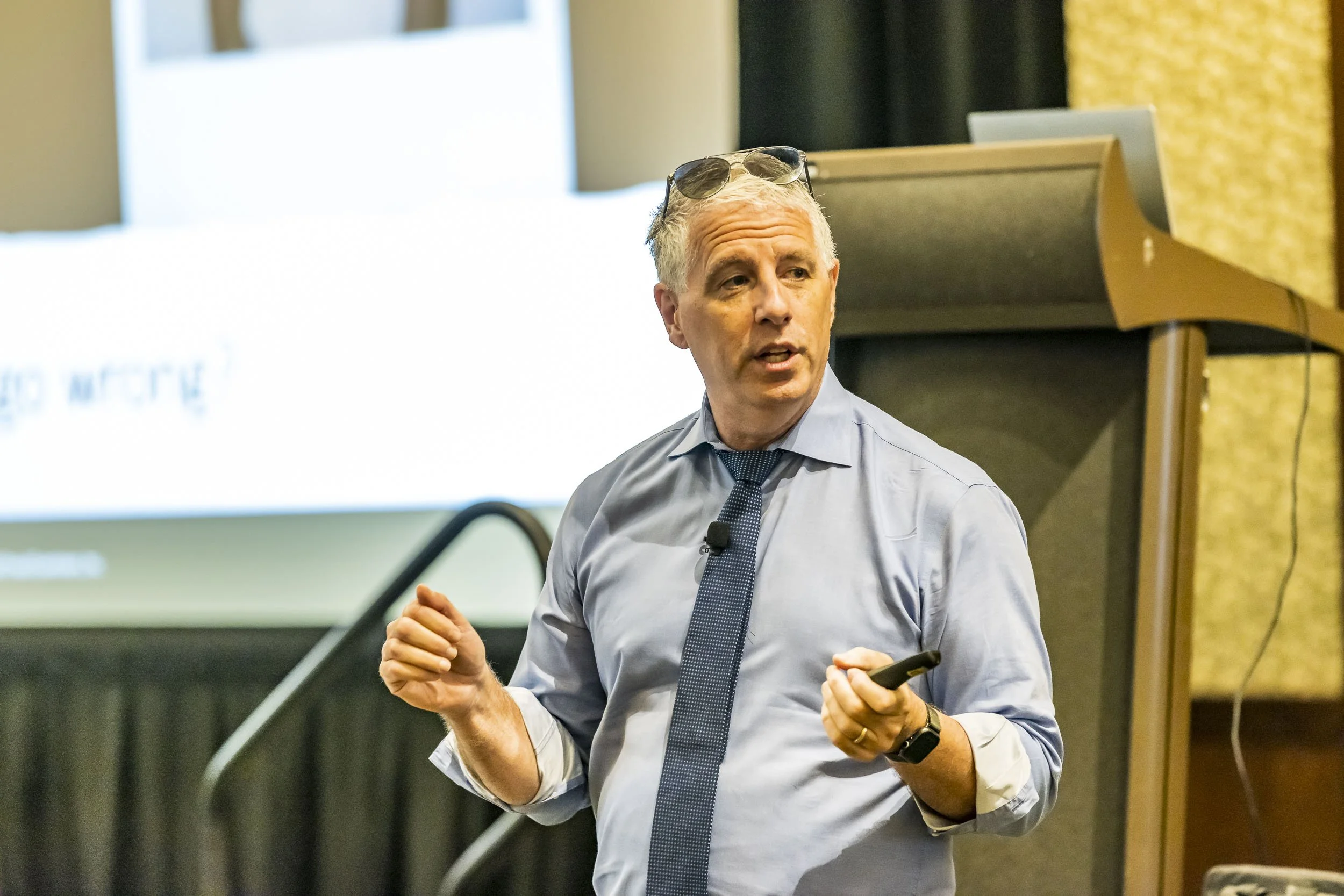
Photo: Victor goodpasture photography
Bret Hood, CFE, spent much of his career as an FBI special agent and supervisory special agent conducting interviews for fraud investigations. Now, he shares his experience and teaches interviewing skills to fraud investigators. According to Hood, the curriculum for interview skills largely focuses on how to interview subjects and ultimately obtain a confession, but not much focus is given to interviewing victims. He shifted that focus with his session at the 37th Annual ACFE Global Fraud Conference, titled, “When Listening Matters Most: Leveraging Science and Research to Interview Victims Effectively.”
Hood told conference attendees that listening is probably the most important aspect of interviewing victims, but fraud investigators also must remember the psychological aspects of victims and keep in mind some considerations when interviewing them.
Victim Blaming
Hood described victim blaming as thinking about someone’s choices with judgment. “How many of you have ever done something stupid?” asked Hood. “How many of you have lost money on something that you probably shouldn't have lost money on or spent money on something that you really didn't need? Why are we so quick to judge others?”
Hood described overconfidence bias, another aspect of victim blaming, as “one of the two most dangerous biases for fraud examiners.” This is when someone believes they’re right more than most people. Meanwhile, illusory superiority is when someone compares themselves to others and thinks that they’re better and can make better decisions than everyone else.
Since many frauds and scams involve high-pressure situations, Hood shared how stress can affect decision-making:
It impairs decision quality since people usually don’t have the time to think about a situation. (Fraudsters know this and use it to their advantage.)
It affects risk-taking decisions.
It makes instinctive decision-making take over.
Prolonged stress can cause mental exhaustion.
Stress often compounds mistakes.
Not all stress is bad.
Memory encoding: Storing memories to be recalled later.
Ron’s Story
To present the importance of active listening and the art of interviewing victims, Hood shared the story of Ron, a 71-year-old man who lost $15 million to fraud and was, understandably, taking the situation hard. Ron worked his way up the chain at a nursing home and eventually owned a few nursing homes, which he then sold. He got involved with trading stocks and then learned about an opportunity to get into a friend’s mortgage business that ended up being a scam.
Because of what happened, Ron’s family removed him from any financial decision-making authority, and his wife was angry with him. Ron felt depressed, humiliated and defeated, among many other emotions. Hood asked the audience how they’d interview him, because Ron didn’t feel like talking about the situation that consumed his life.
Hood suggested empathy, and just like with many interviews, he recommended that investigators build rapport with the interviewee to get them to open up.
The Substance Abuse Mental Health Services Administration (SAMHSA) has six key principles for interviewing victims:
Safety: Does the victim feel safe talking to you?
Trustworthiness and transparency: Hood said the more eye contact you have with a victim, the more likely you are to build trust.
Include peer support.
Collaboration and mutuality.
Empowerment, voice and choice.
Cultural, historical and gender awareness.
Common Mistakes Made by Interviewers
“One of the biggest mistakes that we make is that we try to get to the [information] that we need right away, without taking the time to build that trust, to build that comfort,” said Hood. He said that investigators should focus on the why, the reason for the interview, instead of the what of the interview.
Here are other common mistakes Hood said interviewers make:
Pace: Rushing an interview process that needs to unfold slowly.
Interrupting interviewees’ answers.
Not following through with promises.
Structuring the conversation in unmanageable segments.
Relinquishing control.
Forgoing active listening.
Disregarding potential retraumatization.
Many times, victims are reluctant to relive the event, but Hood said investigators should let that resistance happen.
The Cognitive Interview Technique
Hood recommended this framework for interviewing victims:
Introduction.
Narrative: This is where you ask what happened.
Drawing/sketch: Have the interviewee draw something out to help recreate the memories they have.
Follow-up questions: This helps you get clarification on anything.
Reverse-order technique: Starting from right now and going backwards in time.
Challenge.
Review.
Closing.
Hood returned to the importance of active listening.
“Active listening is one of the most effective ways to communicate and build trust, especially when it comes to victims, because victims are different,” said Hood. “Victims need [their confidence rebuilt] and have trust and rapport.”
