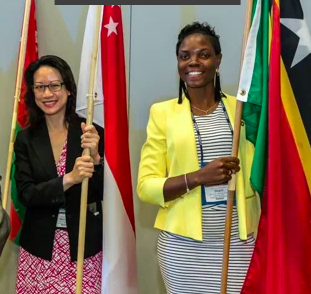
Keynote Speaker Video: Nicholas Thompson

Keynote Speaker Video: Nicholas Thompson

"When new people come in because there's change, it's sometimes harder to spot anomalous behaviors,” said the editor in chief of WIRED Nicholas Thompson in his Tuesday morning keynote address at the 31st Annual ACFE Global Fraud Conference. “Of course spotting anomalous behaviors is how a lot of fraud detection works. You know the patterns of what we do, you look for things that don't quite fit those patterns and you identify that as fraud."

Read More

Thou Shalt Not Steal: How Religious Groups Can Fall Victim to Fraud

Thou Shalt Not Steal: How Religious Groups Can Fall Victim to Fraud

According to the Pew Research Center, 84% of people around the world affiliate themselves with a religious organization. With such a large majority of people connected to religion, churches, synagogues, mosques and other religious centers are seen as pillars of the community. They are often involved charitable works such as distributing food and supplies for the needy or providing moral counsel for congregants. In the U.S., religious institutions are classified as tax-exempt and viewed as public charities; they are technically nonprofits for tax purposes.

However, even groups that purport to do good works and are supposed to be run by people of unblemished character can fall victim to fraud. In his session “Fleecing the Flock: Reducing the Risk of Fraud at Religious and Community Organizations,” at the 31st Annual ACFE Global Fraud Conference, Rollie Dimos, CFE, told attendees that unfortunately organizations like churches can provide fertile ground for fraudsters. Dimos, the director of internal audit for the Assemblies of God National Office said, “[Fraud happens] even in these organizations with high morals, high ethics, high integrity.”

Read More

10 Things a Fraud Examiner Has Learned About QuickBooks®️

10 Things a Fraud Examiner Has Learned About QuickBooks®️

Stephen Pedneault CFE, CPA/CFF of Forensic Accounting Services LLC said he has been using Quickbooks before it was even called Quickbooks (it used to be called Quicken for all you youngsters out there). While it is a handy, affordable tool for small business, nonprofits and churches, it is also vulnerable to manipulation. Here are Pedneault’s 10 lessons learned to help guide you through your next investigation involving Quickbooks.

Read More

Your Responsibility to Uphold a High-Trust Society

Your Responsibility to Uphold a High-Trust Society

At their core, a fraud examiner is responsible for determining what is true and what is not true. As many of you know, it sounds simple, but it is far from simple. Only minutes before Nicholas Thompson, editor in chief of WIRED Magazine, spoke, attendees heard the story of Daphne Caruana Galizia, an investigative journalist who was murdered for her relentless pursuit of the truth. As Daphne’s heartbreaking story illuminates, upholding the truth is often a hefty weight to bear. Throughout his presentation, Thompson touched on this question of truth several times, pointing out that as our lives become even further enmeshed with the internet, that question grows more salient by the day.

Here are the 11 biggest questions Thompson pondered (and encourages you to ponder) about fraud and the technological future.

Read More

Matthew Caruana Galizia Says Guardian Award Will Help Continue and Protect His Mother's Legacy

Matthew Caruana Galizia Says Guardian Award Will Help Continue and Protect His Mother's Legacy

“The Guardian Award recognizes my mother’s work, not just as a personal achievement, but as a legacy that belongs to all journalists, all people who fight fraud, to all people who protest corruption all over the world,” said Matthew Caruana Galizia during the Tuesday morning General Session. Matthew accepted the posthumous 2020 Guardian Award on behalf of his mother, journalist Daphne Caruana Galizia, who was murdered in a car bombing in Malta in 2017. “My mother herself is now beyond all harm, but the Guardian Award honors her life’s work. In doing so, it helps to protect this legacy.”

Read More

The Cyber Sickness No One Wants ... Ransomware

The Cyber Sickness No One Wants ... Ransomware

Between 2009 and 2010, Iran’s nuclear program was the target of a devastating cyber attack. A virus took control of centrifuge controls in facilities across the country, causing thousands of machines to break. The hackers weren’t satisfied yet, though. To add insult to injury, they reportedly hijacked the facilities' workstations and used them to play AC/DC … loudly.

Read More